Restaurant TechMulti-surface DesignSaaSDesign System
MenuMitra
Complete restaurant operating system, built around the QR code
Scroll
TheProblem
Indian restaurants — from neighbourhood cafes to multi-outlet chains — were running on paper and memory. Physical menus cost thousands to reprint every time a price changed. Orders travelled by voice from table to kitchen, arriving wrong or not at all. Owners had no visibility into which dishes were actually profitable. And post-pandemic, handing customers laminated menus felt like a liability. But the deeper problem wasn't the lack of digital tools — it was that the table, the waiter, the kitchen, and the billing counter each operated as isolated islands with zero real-time connection to each other.
Menu updates required costly reprints — owners were manually updating menus 3–4 times per year minimum, losing revenue during the gap
Kitchen order communication was verbal or paper-based — errors and delays were daily occurrences with no audit trail
Owners had zero item-level data — no visibility into which dishes drove margins vs. which ones quietly drained them
Existing digital solutions required customers to download an app — fatal friction that killed adoption before it started
Enterprise POS systems were priced far beyond the reach of small and mid-size restaurants, leaving the majority of the market completely unserved
02
Research & Discovery
I spent two weeks embedded in the actual restaurant environment — across single-outlet dhabas, mid-scale cafes, and multi-outlet food courts in Pune and Mumbai — observing the full operational rhythm from prep to close. I interviewed 35 stakeholders: owners, head waiters, kitchen staff, billing operators, and customers. The research revealed something counterintuitive: restaurant owners didn't just need a digital menu. They needed an operating system. The QR code was just the entry point — the real value was in connecting the customer's order to the kitchen display, the kitchen display to the billing system, and all of it to an analytics layer that showed owners what was actually happening in their business in real time.
01
Field observations at 20+ restaurants across Pune and Mumbai — single outlet to 4-outlet chains
02
35 stakeholder interviews: owners, head waiters, kitchen staff, billing operators, and dine-in customers
03
Competitive audit of 12 tools: Zomato/Swiggy (delivery-only), LimeTray (expensive, complex), basic QR PDF menus (no interactivity), and enterprise POS systems (inaccessible pricing)
04
Key insight: customers had been conditioned to zero-friction by UPI payments and web apps — any solution requiring an app download was dead on arrival
05
Discovered multi-outlet management as severely underserved: chain owners were coordinating across outlets via WhatsApp groups and shared spreadsheets
Design Exploration
The central design question was how to serve six radically different user types from one connected system — a customer who wants to order in seconds, a waiter managing 8 tables simultaneously, a kitchen chef who needs zero ambiguity under pressure, a billing operator processing payments in a rush, a manager tracking daily performance, and an owner monitoring everything remotely. Early explorations treated these as separate apps with shared data. The breakthrough was the modular surface model: each user type gets a purpose-built interface optimised entirely for their context and pressure level — while a single real-time sync layer keeps everything connected invisibly underneath. Complexity stays at the system level, not at any individual user's screen.
TheSolution
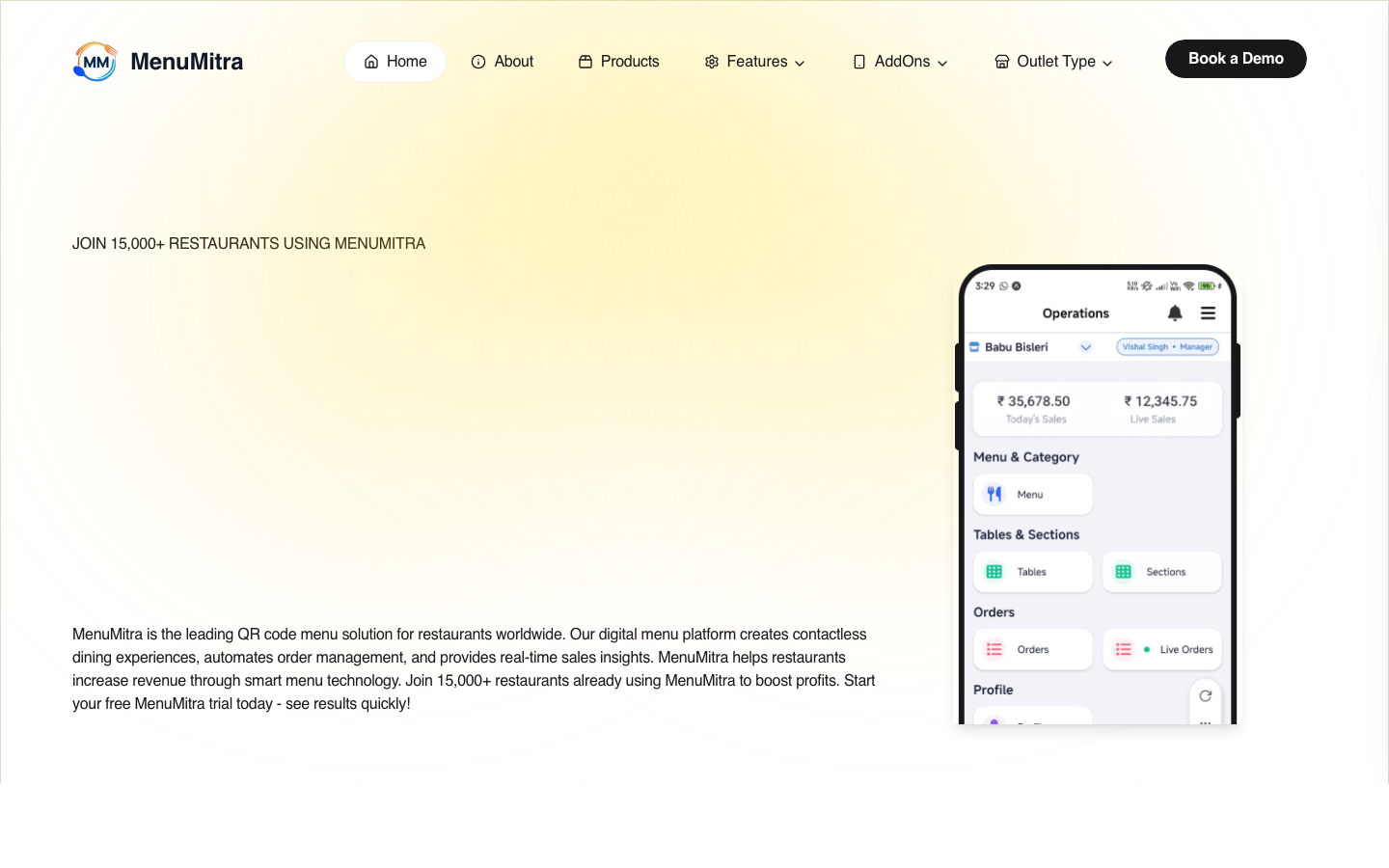
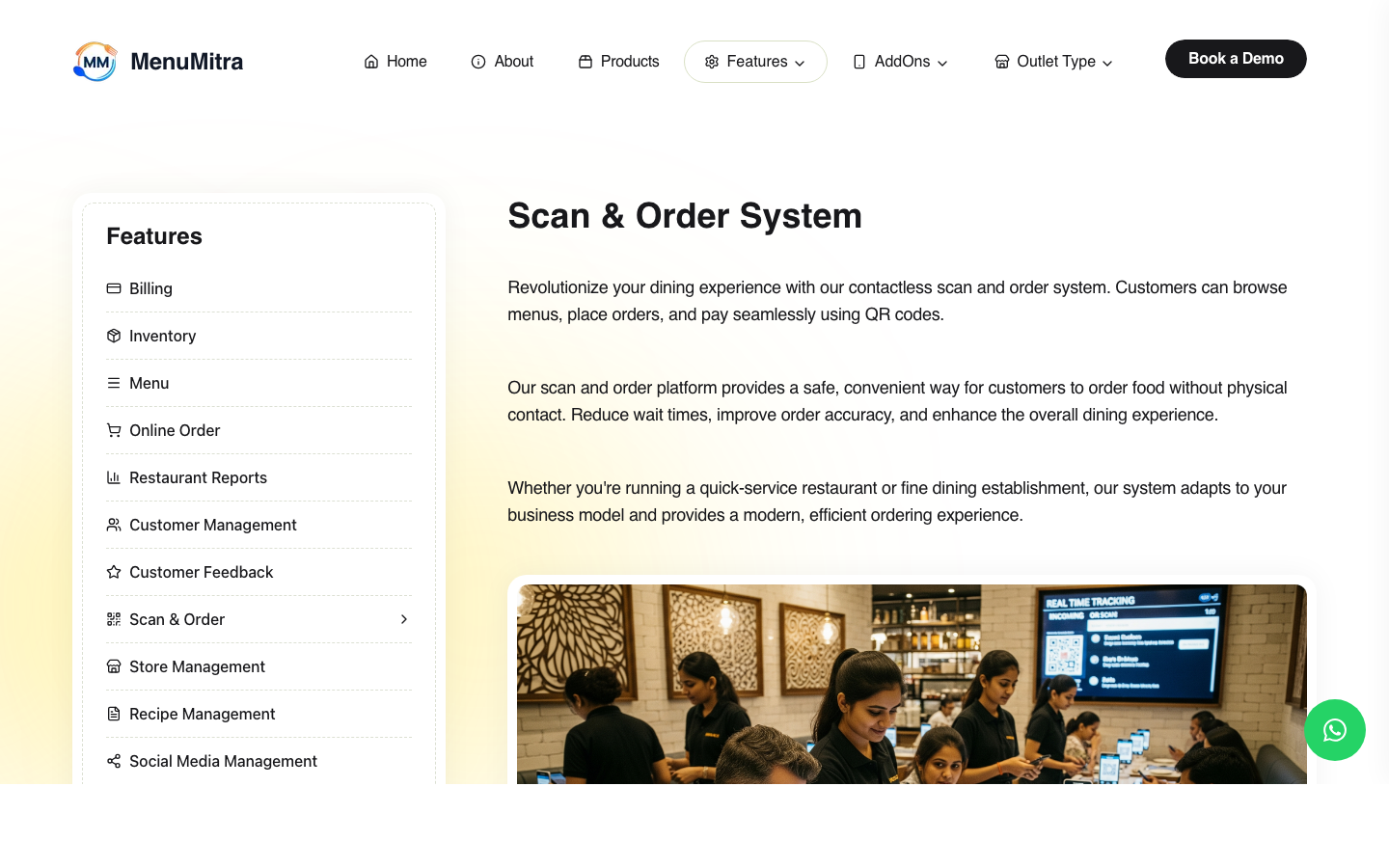
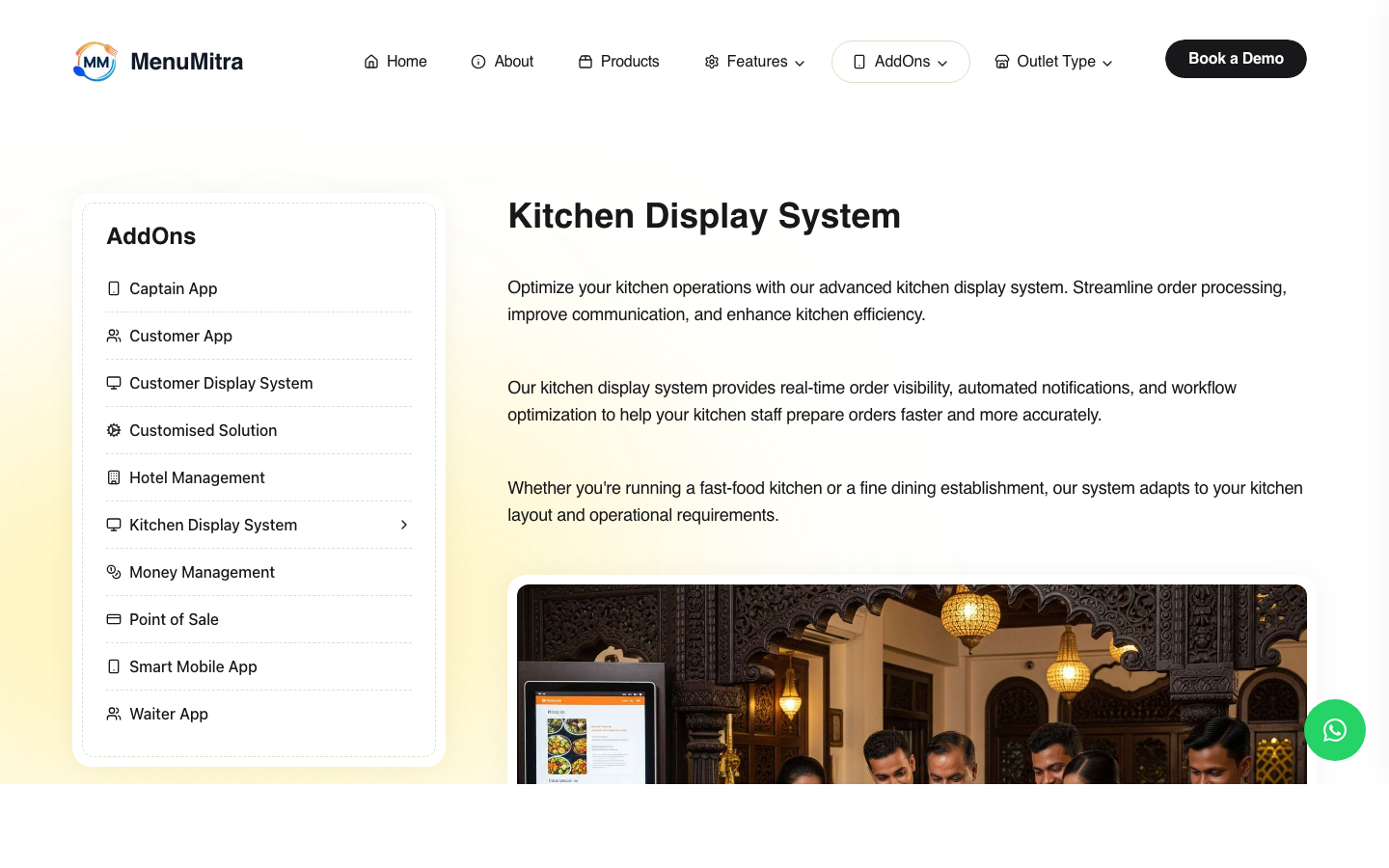
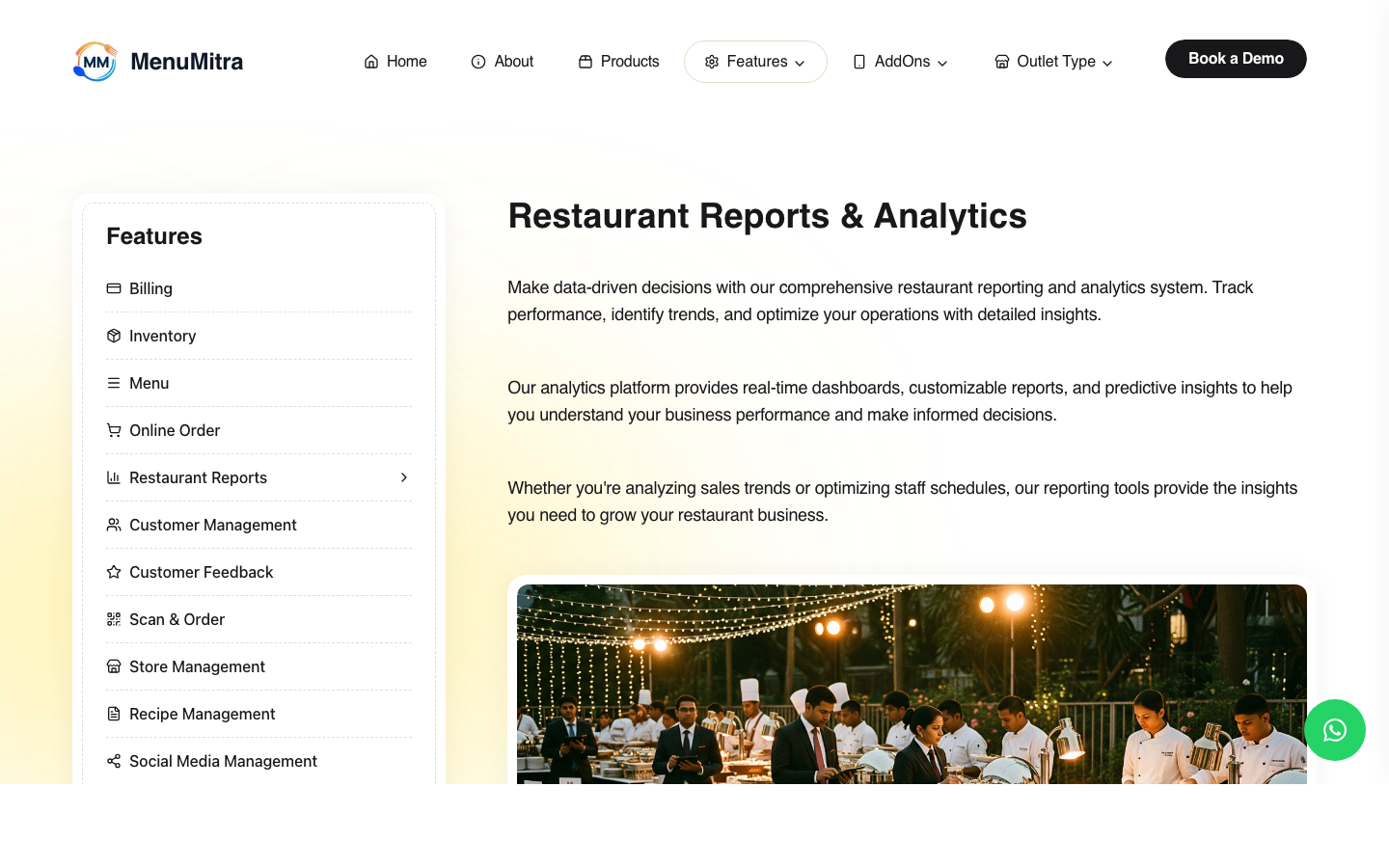
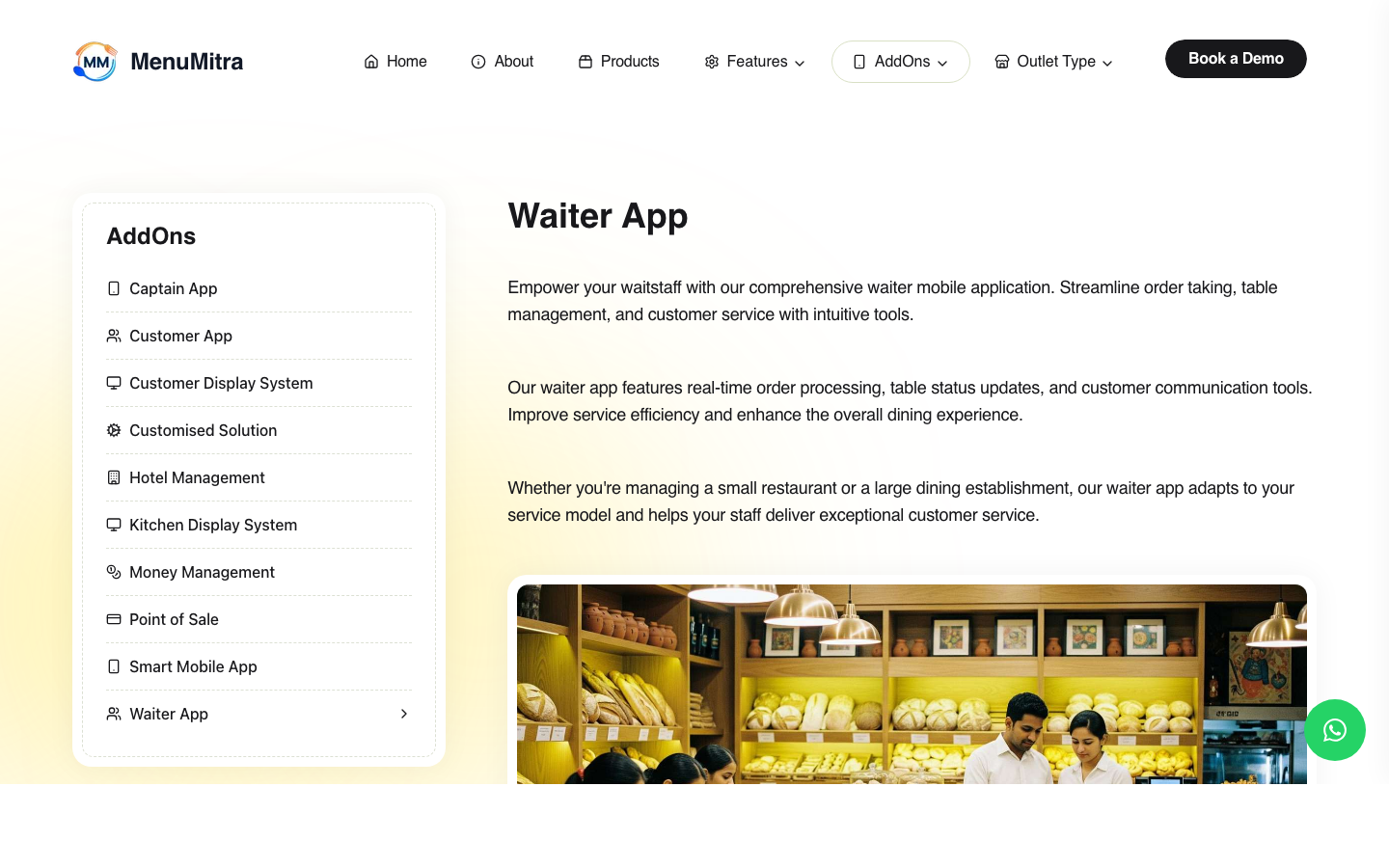
MenuMitra was designed as a complete restaurant operating system built around the QR code as the primary interaction model. A customer scans the QR on their table, instantly sees a full interactive digital menu — no app required, works on any smartphone — adds items, and places the order directly. That order routes automatically to the correct kitchen station (hot, cold, or beverages) and appears on the Kitchen Display System with timing and priority. The waiter app handles table assignment, order modification, and bill requests. The Captain App manages table status and floor overview. The billing POS handles payment with integrated gateway support. The owner dashboard provides real-time revenue tracking, item-level sales analytics, inventory alerts, and staff performance data — across single outlets and multi-location chains from one screen.
05
My Contribution
AsLeadProductDesigner,Iownedend-to-enddesignacrossall6interfacesurfaces:thecustomerQRmenu,theKitchenDisplaySystem,theWaiterApp,theCaptainApp,theOwnerAnalyticsDashboard,andtheBillingPOS.Iconductedthefieldresearch,mappedalluserjourneyflows,builttheinformationarchitecture,establishedthedesignsystem,andproducedhigh-fidelityprototypesforeverysurface.Ialsodesignedtherestaurantonboardingexperience—thecriticalfirst30minutesthatdeterminedwhetherarestaurantownerwouldstayorchurn.Themostcomplexdesignchallengewasthereal-timestatuslayer:howdoesawaiterknowtheirorderwasacceptedbythekitchenwithoutcheckingtheirscreeneveryminute?Thesolutionwasambientstatusindicatorsembeddedintothetableview—nointerruptiontoworkflow,justapersistentvisualgroundtruth.
Impact & Outcomes
The platform launched with a pilot of 50 restaurants in Maharashtra and scaled from there. MenuMitra now serves 2500+ restaurants across India spanning 12 different outlet types — from single-outlet cafes and cloud kitchens to large multi-location chains.
2500+
Restaurants on platform
25%
Avg. revenue growth reported
4.8/5
Customer satisfaction rating
6
Interface surfaces designed
Reflection
MenuMitrataughtmethatthemostpowerfuldesigndecisionsaren'tvisual—they'reaboutinformationtiming.Thequestionofwhichscreenshouldshowthisdatamattersfarlessthanasking:atwhatmomentinthisperson'sworkflowdotheyneedthisinformation,andhowmuchoftheirattentioncanweaskforatthatmoment?AchefunderSaturday-nightpressureandacustomercasuallybrowsingalunchmenuareusingthesameunderlyingdata—buteverydesigndecisionforeachofthemhastobemadeasiftheotherdoesn'texist.Holdingbothrealitiessimultaneously,anddesigningforthefullspectrumofpressurelevelsacross6differentusers,becamethedefiningdesignskillIdevelopedthroughthisproject.