AI/MLPropTechWeb + MobileDesign System
Trythat.ai
AI-powered property intelligence platform
Scroll
TheProblem
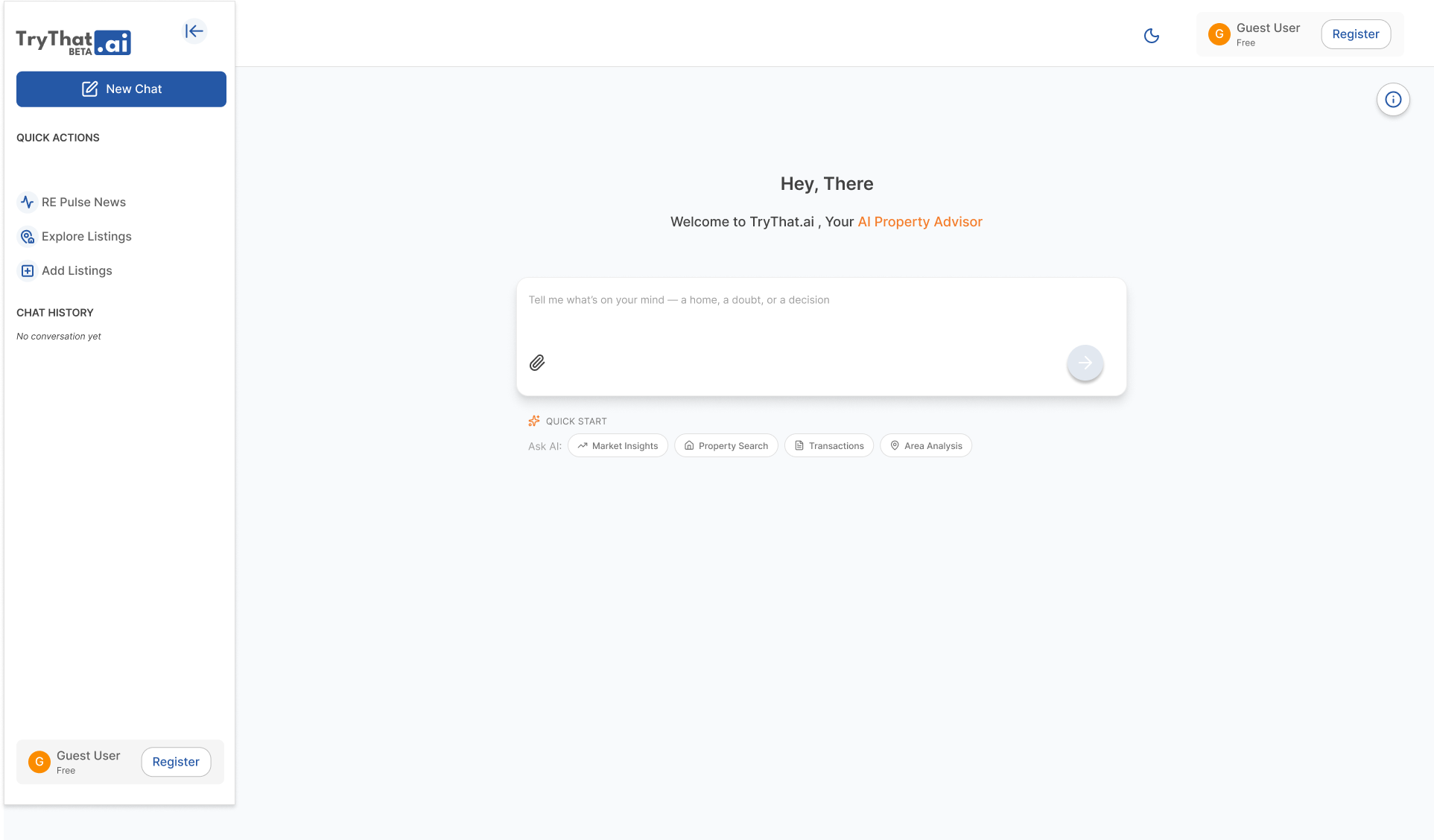
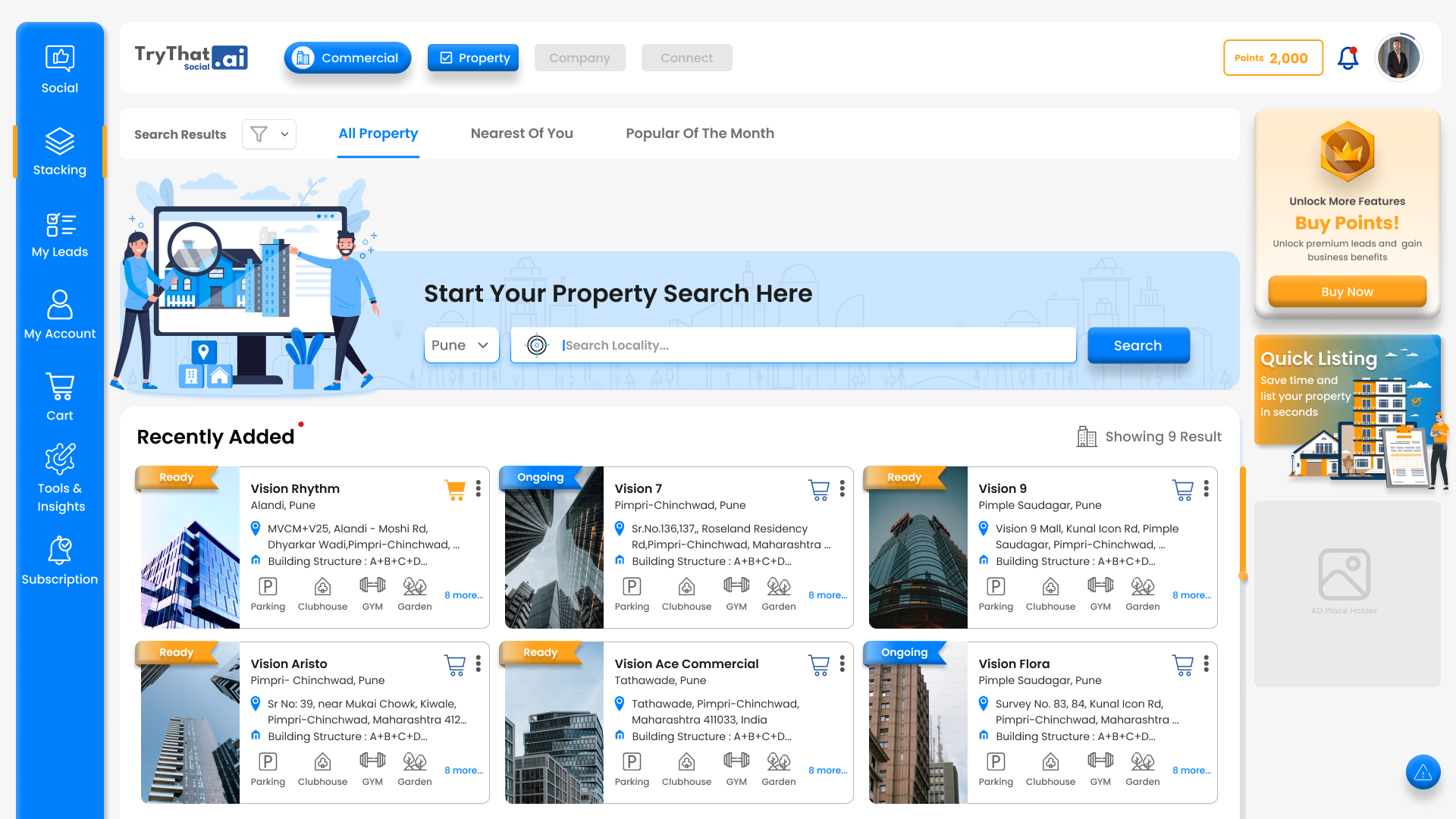
Trythat.ai was India's first platform to combine property listings with AI-driven data insights — a powerful proposition buried under a cluttered, e-commerce-style UI. Users couldn't find features they needed, the information hierarchy was broken, and the UX copy left people confused. The platform felt like it was fighting against itself: powerful capabilities, poor discoverability.
Users consistently reported the app was "not easy to use" — key features were hidden behind confusing navigation
Information architecture was broken: property listings, data insights, and AI tools were siloed with no clear flow between them
UX copy was unclear and inconsistent, leaving users guessing what actions would do
The legacy blue-and-orange interface looked dated and e-commerce-generic, undermining trust in an AI-first product
02
Research & Discovery
Without a dedicated research budget, I built our understanding from the ground up using proxy research methods. The sales team had accumulated months of direct user feedback — complaints, feature requests, and drop-off patterns. I synthesized this alongside stakeholder interviews to map the real friction points. In parallel, I ran a deep competitive analysis of 99acres, IndExTap, and MagicBricks to understand market patterns and identify where Trythat.ai could differentiate through design.
01
Synthesized 6 months of sales team feedback into a structured pain point matrix — categorized by severity and frequency
02
Conducted stakeholder interviews across product, engineering, and business teams to align on vision and constraints
03
Competitive audit of 99acres, IndExTap, and MagicBricks — mapped feature parity, UX patterns, and gaps
04
Identified the core differentiator: no competitor combined property listings with data insights in one experience
Design Exploration
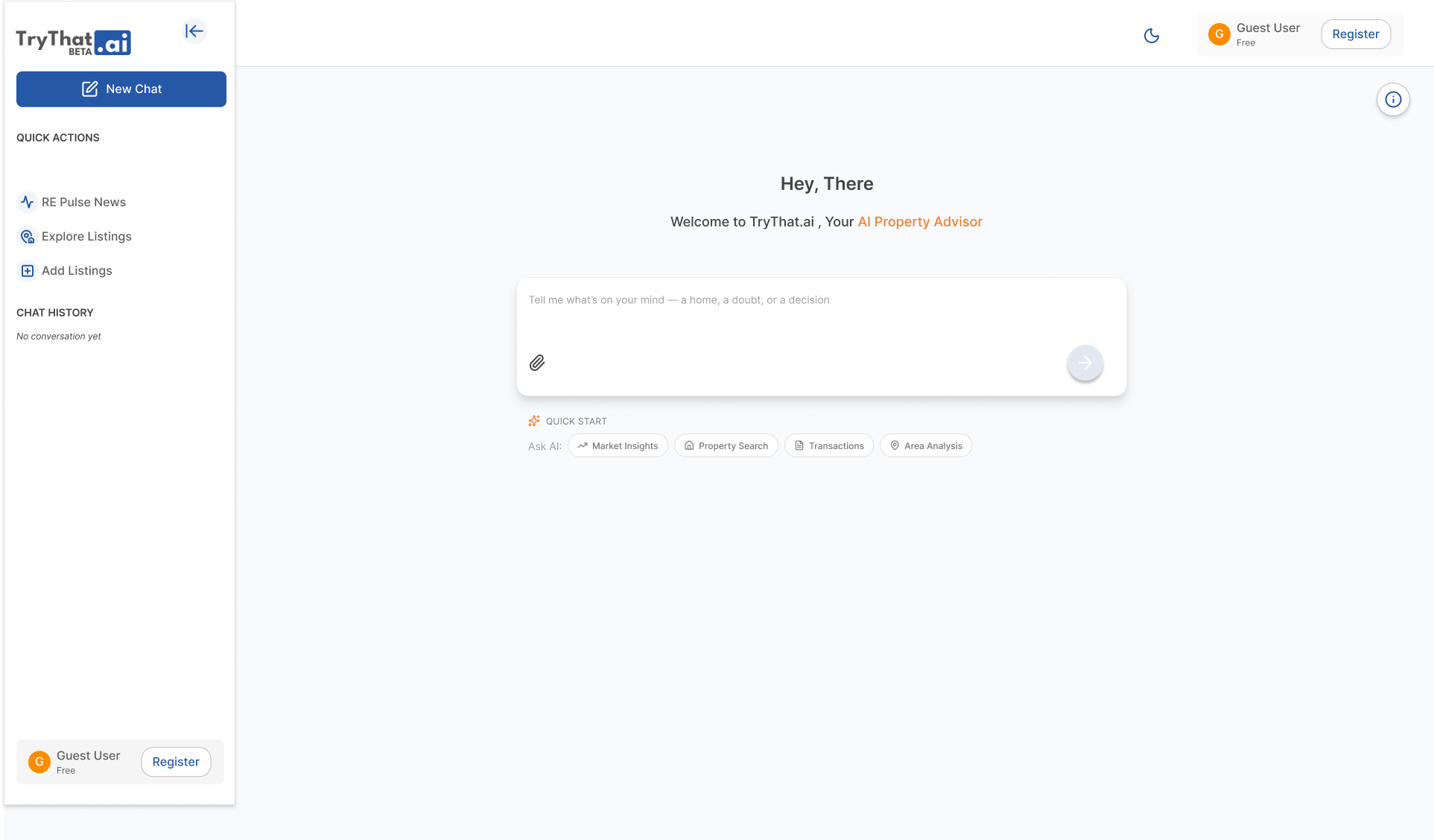
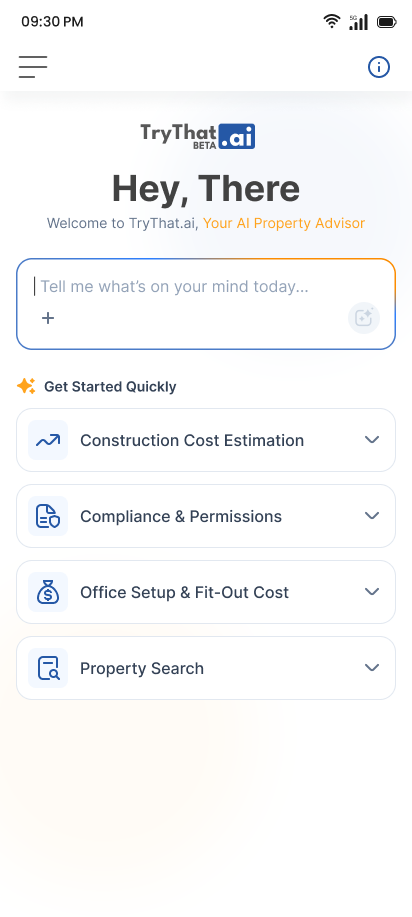
The central design challenge was merging two fundamentally different interaction models — browsing property listings (visual, exploratory) and analyzing data insights (structured, analytical) — into one cohesive experience. I explored multiple information architectures before arriving at a chat-first paradigm where the AI assistant acts as the connective tissue between these modes, letting users flow naturally from discovery to analysis.
TheSolution
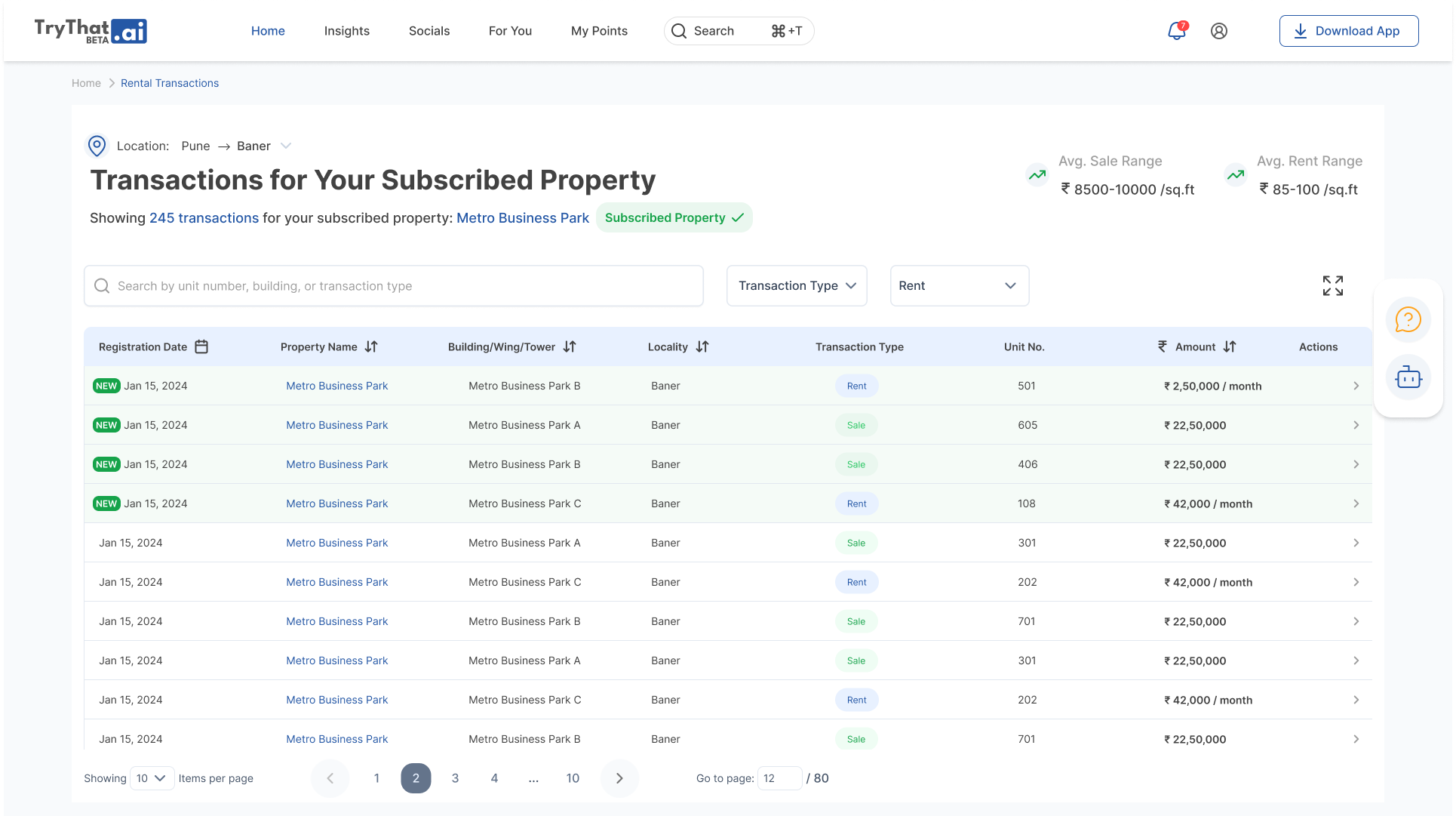
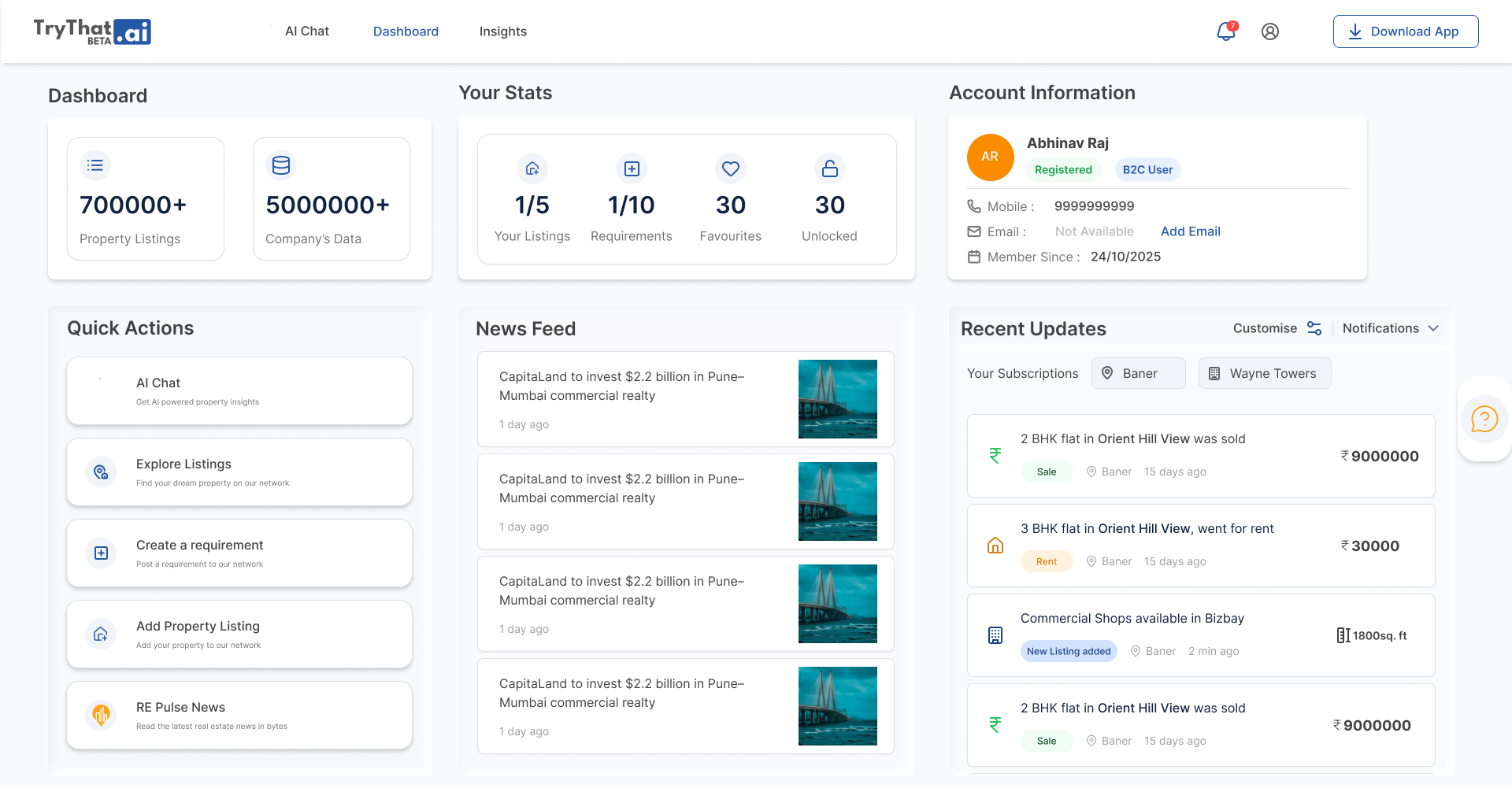
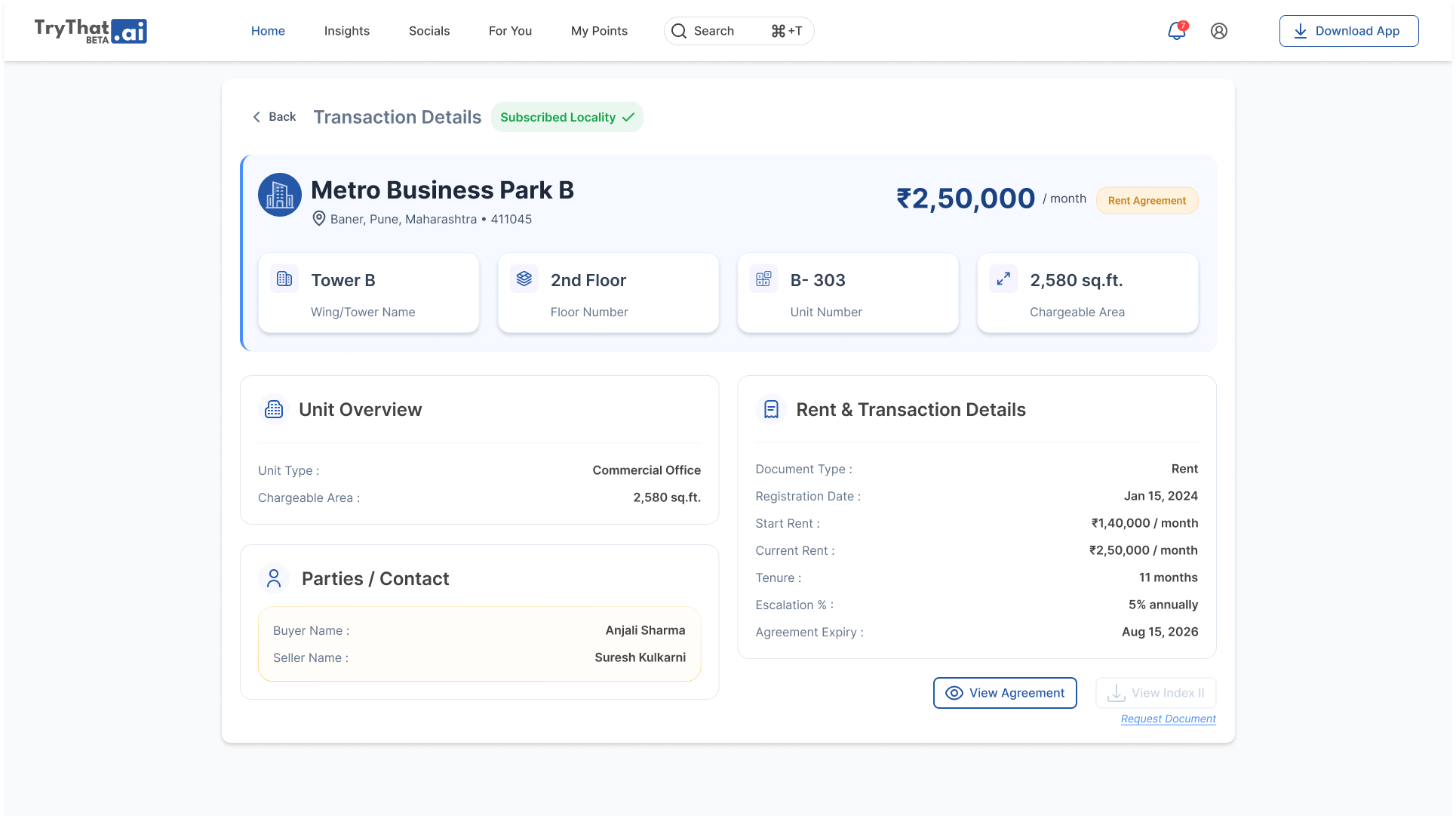
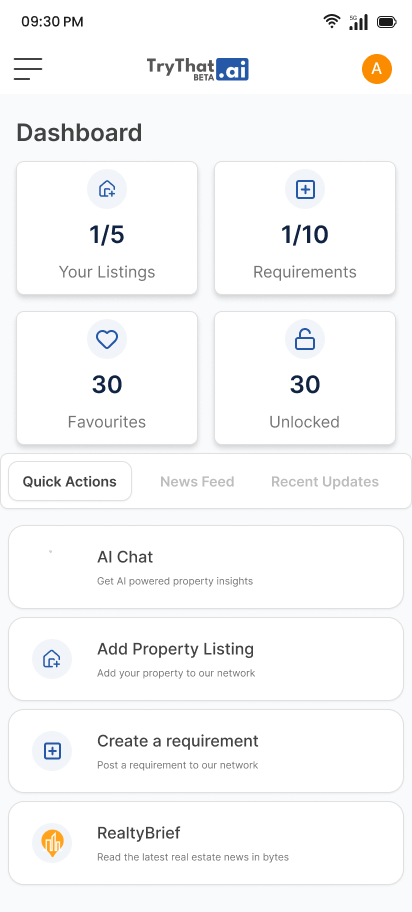
The redesign introduced a chat-first AI interface as the primary interaction model. Instead of forcing users through traditional navigation, the AI property advisor surfaces relevant listings, data insights, and market trends through conversational queries. The web platform was rebuilt with a clean, spatial design language — dark-mode first, with clear data visualization for property analytics and transaction details. Simultaneously, I designed the mobile app (React Native) from scratch for both Play Store and App Store, ensuring feature parity while adapting interactions for touch-first contexts.
Mobile Experience

05
My Contribution
AsUI/UXLead,Iownedtheend-to-enddesignvisionacrossbothplatforms.IbuiltacomprehensivedesignsysteminFigma—Interasthetypefoundation,arefinedblue-and-orangepalette(evolvedfromthelegacybrand),structuredtokennaming,andafullcomponentlibrarysharedbetweenwebandmobile.Iledateamof2designers,runningdesigncritiquesandestablishingreviewprocesseswiththe8-personengineeringteam.Ipersonallydesignedthehigh-impactsurfaces:theAIchatexperience,thepropertydatatables,themobilenavigationarchitecture,andthedesignsystemdocumentation.
Impact & Outcomes
Both platforms launched within the 8-month timeline. The mobile app went live on Play Store and App Store, while the web platform was completely rebuilt from the ground up.
10K+
Play Store downloads
10K+
Active user base
2
Platforms redesigned
Complete
Design system
Reflection
Thisprojectreinforcedmybeliefthatconstraintsbreedcreativity.Withoutformaluserresearch,webuiltunderstandingthroughsalesteamproxiesandcompetitiveintelligence—anditworkedbecausewestayedclosetothepeoplewhotalkedtousersdaily.ThebiggestdesigninsightwasthatAI-firstdoesn'tmeanAI-only:thechatinterfaceworksbestwhenitcomplements,notreplaces,structurednavigation.Userswanttoexplorefreelyandaskquestionswhentheygetstuck—thechat-firstparadigmservesbothmodes.IfIcouldrevisitonedecision,I'dpushhardertovalidatethemobileIAthroughrapidprototypetestingbeforecommittingtodevelopment.